
Why Merch Is the New Royalty Check, and How Tech Is Closing the Gap


Key Takeaways
Selling one $35 band T-shirt generates the same revenue as 8,750 Spotify streams. That single number explains why the smartest people in the music industry are rethinking where artist revenue actually comes from.
The royalty math that doesn't work
Let's start with what streaming actually pays. These are real per-stream rates from 2024-2025:
| Platform | Per-Stream Payout | Per 1,000 Streams |
|---|---|---|
| Tidal | $0.012 - $0.015 | ~$12.84 |
| Apple Music | $0.007 - $0.01 | ~$6.20 |
| Amazon Music | $0.004 - $0.008 | ~$8.80 |
| Spotify | $0.003 - $0.005 | ~$3.00 |
| YouTube Music | $0.002 - $0.005 | varies |
At Spotify's rate, an artist needs roughly 350,000 streams per month just to earn a U.S. minimum wage. That puts streaming income out of reach for the vast majority of working musicians.
Meanwhile, streaming accounts for 69% of total recorded music revenue globally. In 2024, that was $20.4 billion out of $29.6 billion (IFPI). The money is enormous at the platform level, but it gets diluted through labels, distributors, and publishers before it reaches artists.
Merch: the 8x multiplier
Here's where the economics flip. According to atVenu, the industry-standard merch analytics platform, the average small to mid-cap artist makes 8x more per show in gross merchandise sales than a year's worth of streaming royalties.
That's not a typo. One show's merch table versus twelve months of streams.
The numbers behind this are straightforward:
- Average merch revenue per head at live shows is $10.29 in 2025, up 14% from 2024
- Average item prices increased 9% year over year
- A single $35 T-shirt equals ~8,750 Spotify streams in artist revenue
- A $60 hoodie equals ~15,000 streams
And unlike streaming, where revenue depends on algorithmic placement and playlist inclusion, merch revenue is driven by something labels can't easily replicate: direct fan connection.

The fastest-growing segment in recorded music
This isn't just anecdotal. The industry data backs it up.
IFPI's Global Music Report shows that "expanded rights" - which includes merch, licensing, and fan experiences - grew 21.5% in 2025. That makes it the fastest-growing segment in the entire recorded music industry, outpacing streaming growth significantly.
Goldman Sachs projects global music revenues will double to $200 billion by 2035, with superfan monetization identified as a key growth driver. Their "Music in the Air" report estimates the superfan opportunity alone at $4.3 billion annually.
Fan-designed merch: the model that changes everything
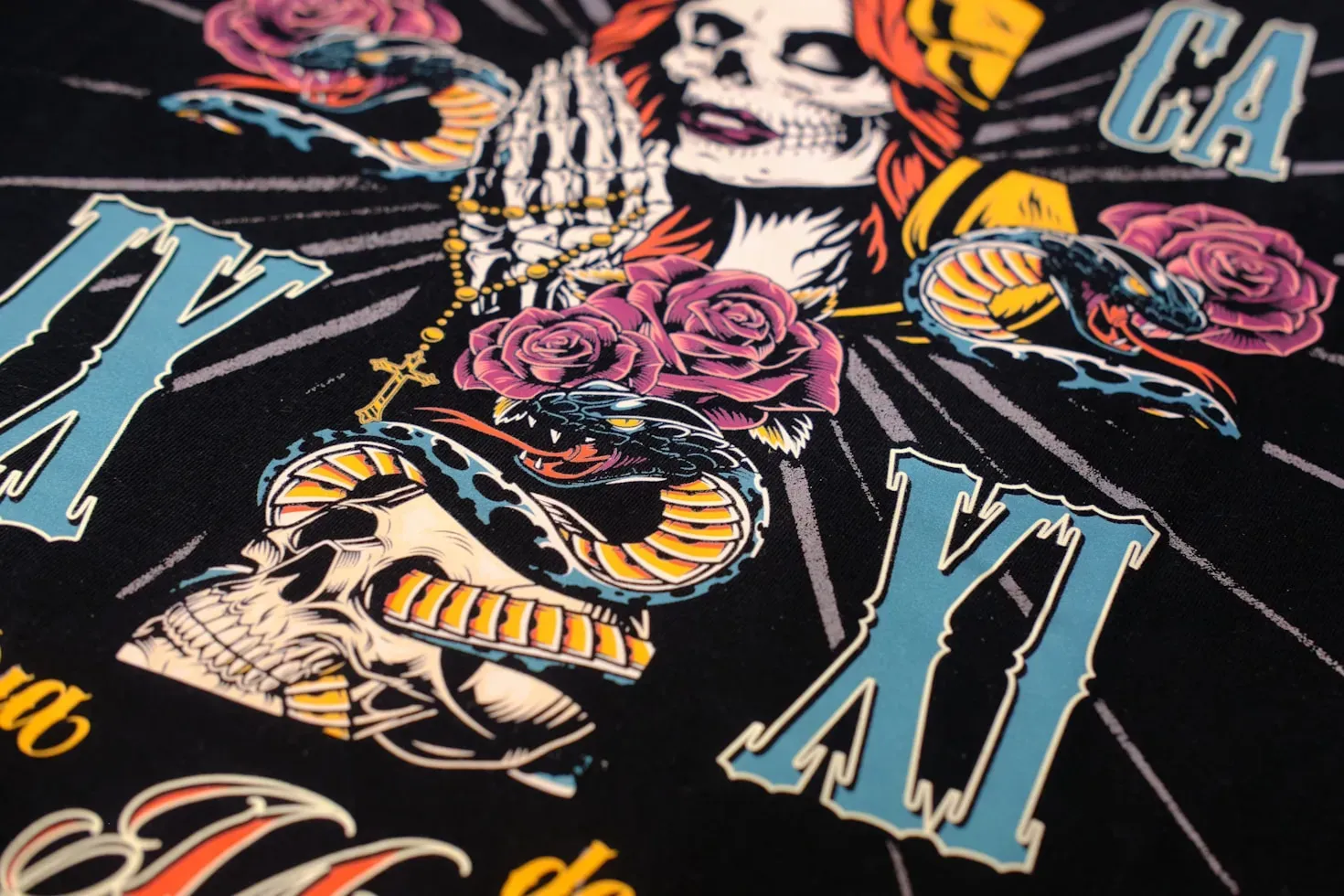
Traditional merch has a problem: artists (or their labels) design it, manufacture it in bulk, ship it to warehouses, and hope it sells. That means upfront capital, inventory risk, and unsold stock sitting in boxes.
Fan-designed merch flips this model. Fans create designs. Artists approve them. Both parties earn from sales. And nothing gets manufactured until someone actually buys it.
This is the model that platforms like Softside, our partner in this space, are pioneering: fans submit designs, artists approve them, and both sides earn from every sale - with licensing and revenue splits handled by the platform.

The economics are compelling:
- Zero inventory risk - print-on-demand means no unsold stock
- Community engagement - fans become co-creators, not just consumers
- Scalable catalog - hundreds of designs without hundreds of SKUs in a warehouse
- Global fulfillment - POD networks handle printing and shipping worldwide
The global print-on-demand market is now valued at $11-13 billion and growing at 23-26% CAGR. The infrastructure exists. The question is how to connect it to artist storefronts seamlessly.
The tech stack that makes it work
This is where things get practical. For fan-designed merch to work at scale, you need a pipeline that connects the design platform (where fans create and artists approve) to the storefront (where fans buy) to the fulfillment network (where products get made and shipped).
At MusicTech Lab, we're building exactly this kind of bridge for Softside, a creator platform for licensed fan-designed merch. Our custom Shopify app connects Softside's catalog of artist-approved designs directly to each artist's Shopify store:
- Product sync - approved designs are automatically pushed to Shopify with correct variants (sizes, colors), pricing, and images
- Order routing - when a fan purchases merch on the artist's store, the order flows back to Softside for print-on-demand fulfillment, and the fan receives standard order notifications along the way
The key technical challenge is mapping between two different product models. Softside thinks in terms of "approved designs with print areas." Shopify thinks in terms of "products with variants and SKUs." The sync layer translates between them, handling variant explosion (one design x multiple sizes x multiple colors = many Shopify variants) and keeping everything in sync as designs are added, updated, or removed.
Our goal at Softside has always been to make the fan-designed merch experience as thoughtful and effortless as possible — one where everything is artist-approved, monetizable for both sides, and built around what artists and fans actually need. A system like that requires deep technical infrastructure: hundreds of designs, variants, and orders staying in sync between our platform and artists' stores. MusicTech Lab understood these nuances from day one and helped build the connective tissue that makes it all feel seamless.

Erin Singleton — Founder & CEO, Softside
The risk: fan fatigue
MIDiA Research found that 39% of fans feel their fandom is being exploited, and nearly half say merch is becoming unaffordable. As Mark Mulligan from MIDiA puts it: "You cannot harvest fandom if you are not also nurturing it."
The takeaway: merch works best as a relationship channel, not a revenue extraction tool. Fan co-creation helps here - participants spend more willingly than passive buyers.
What this means for labels, managers, and artists
The shift from streaming royalties to merch as a primary revenue driver isn't a trend. It's a structural change in how the music economy works. Here's what to do about it:
- Treat merch like your release calendar. Regular drops, seasonal collections, and limited editions keep fans engaged
- Consider fan co-creation. Fans submit designs, you approve - a creative team with zero payroll
- Go multi-channel. Own Shopify store for margins, marketplace presence for reach
- Track revenue per head. The $10.29 average RPH in 2025 is a benchmark - if you're below it, there's room to grow
- Invest in the tech stack. Automated catalog sync is infrastructure, not a nice-to-have
- Watch the affordability signal. 39% of fans feel exploited - offer a range from $15 accessories to $60 premium items
- The integration layer is the opportunity. Shopify, POD networks, and design tools exist - the glue between them is missing
- Think beyond apparel. Home decor is the fastest-growing POD category in 2026
- Build for the long tail. Millions of mid-tier artists have no merch operation at all
The bottom line
Streaming built the modern music industry's distribution layer. But it didn't solve the artist revenue problem. Merch - especially tech-enabled, fan-driven, zero-inventory merch - is the strongest candidate to fill that gap.
One T-shirt equals 8,750 streams. One engaged fan community designing merch equals a sustainable revenue engine. The math has never been clearer.
Sources
- How Music Streaming Platforms Calculate Payouts Per Stream (2025) - Royalty Exchange
- An Updated Look at Artist Merch Trends in 2025 - atVenu
- How Much Money Artists Make in Streaming vs. Merchandise Sales - atVenu
- Global Merchandise Market to Hit $16.3 Billion by 2030 - MIDiA Research
- Are We Reaching Peak Fandom? - MIDiA Research
- IFPI Global Music Report: Revenues Grew 4.8% in 2024 - IFPI
- Global Recorded Music Revenues Hit $31.7B in 2025 - Music Business Worldwide
- Global Music Revenues Forecast to Double to $200B by 2035 - Goldman Sachs
Let's Build Something Together
Have a similar project in mind? We'd love to hear about it.
Get in touch to discuss how we can help bring your vision to life.
Walkative 2.0 Global Booking Engine
How we built a cloud-based booking platform for the leading free walking tour company, handling thousands of weekly reservations across European cities.
13 Distributors, 5 File Formats, Zero Standards -The Reality of Music Royalty Data
Every month, independent labels receive royalty reports from over a dozen distributors. No two look the same. Here's what that actually looks like.
Related Articles





AI Product Developer
Technical partner at MusicTech Lab with 15+ years in software development. Builder, problem solver, blues guitarist, long-distance swimmer, and cyclist.
Newsletter
Get music tech insights, case studies, and industry news delivered to your inbox.