
DDEX Open Source Projects Review


Key Takeaways
In the rapidly evolving digital music industry, managing the exchange of data across different platforms and services can be a daunting task. The complexity of licensing, distribution, and rights management makes seamless data exchange essential for all players involved - artists, record labels, distributors, and digital service providers (DSPs). To address this challenge, the Digital Data Exchange (DDEX) consortium was established to standardize data formats and processes across the industry. DDEX plays a critical role in ensuring that music rights, royalties, and metadata flow smoothly across the digital ecosystem. Among its most significant contributions are its open-source projects, which provide tools and resources that allow stakeholders to easily implement DDEX standards.
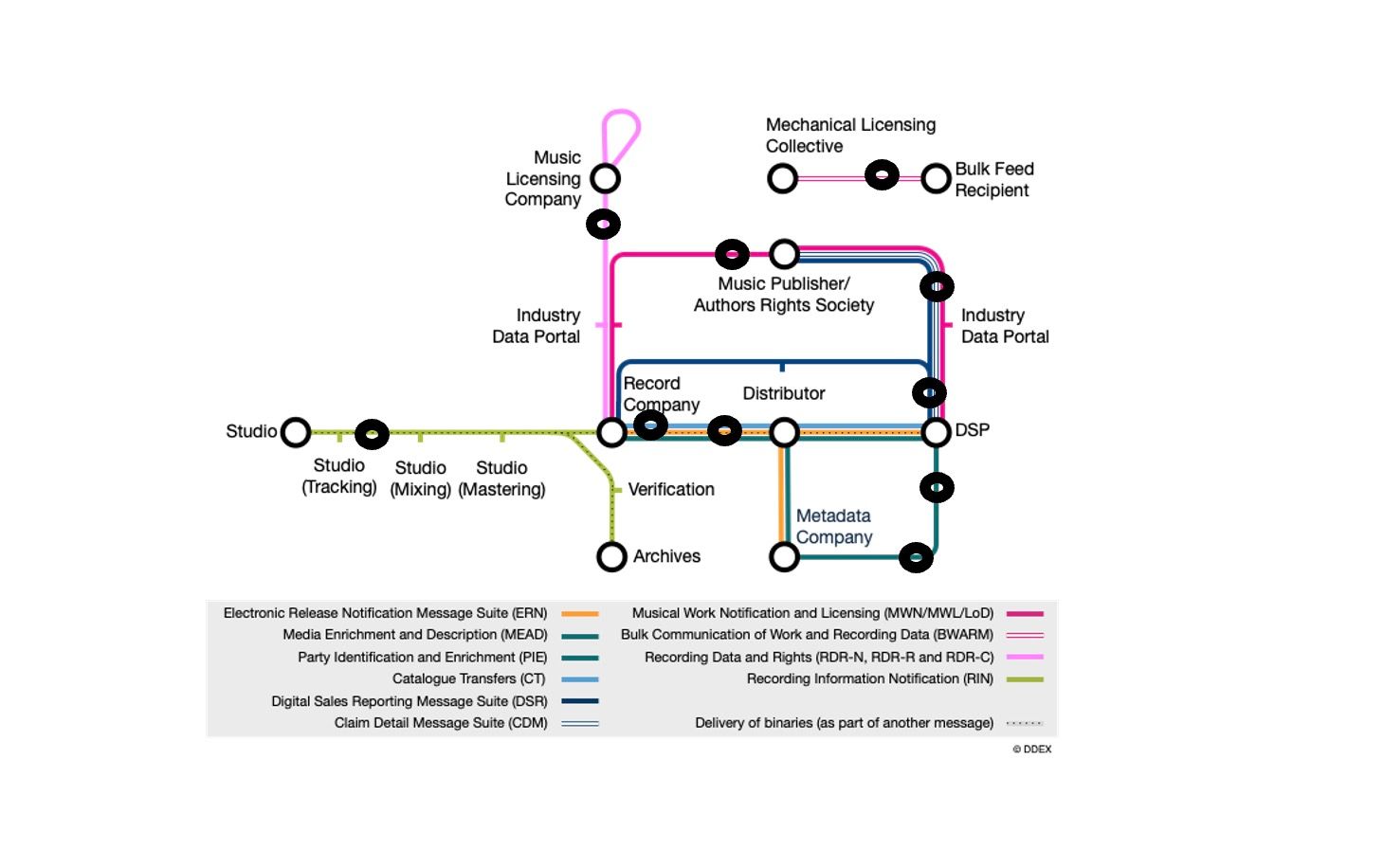
CREDIT: DDEX website
What is DDEX?
DDEX, founded in 2006, is a consortium of leading media companies, digital music services, and music rights organizations. It creates and maintains standards for the communication of metadata between businesses in the digital music supply chain. These standards ensure that information such as licensing details, royalties, and usage data is accurately transferred between parties involved in the production, distribution, and consumption of digital media. The core of DDEX's mission is to enable a more efficient exchange of metadata, which is crucial for tracking music rights and ensuring that artists and rights holders receive fair compensation for their work.
Open Source in DDEX
DDEX's open-source projects allow developers and businesses to implement its standards without having to start from scratch. By making these projects available under open-source licenses, DDEX encourages collaboration, innovation, and faster adoption of standardized protocols. This approach lowers the barrier for small and large players alike, enabling the entire music industry to benefit from greater consistency and transparency in metadata management. Here is a list of Open Source tools provided by DDEX: https://kb.ddex.net/reference-material/open-source-software/ Let's delve inside them.
Open Source Software (from DDEX website)
The DDEX website lists several open-source tools available on GitHub, developed by various companies and individuals. These tools can assist with parsing, validating, and converting DDEX-compliant metadata files in various programming languages, such as Python, Ruby, JavaScript, and PHP. Many of the tools focus on validating, parsing, and converting DDEX XML files related to music metadata, ensuring conformance to DDEX standards for digital sales reporting (DSR), Electronic Release Notification (ERN), and Metadata Choreography (MEAD).
- Standard: DSR (Digital Sales Report)
- Description: The DSRF Flat File Parser and Conformance Tool is an open-source library that allows parsing and testing of DDEX DSR Flat files, ensuring they comply with DDEX DSR Flat File Standard v3.0.
- Language: Python
- Creator: Google
- Standard: ERN (Electronic Release Notification)
- Description: This library facilitates DDEX metadata serialization for Ruby. Comprehensive documentation is available for easy integration.
- Language: Ruby
- Creator: Skye Shaw
- Standard: ERN
- Description: A tool developed by 7digital for batch deserialization of DDEX XML files, allowing seamless conversion of XML data to usable formats.
- Language: C#
- Creator: 7digital
- Standard: ERN
- Description: A validation service designed to verify DDEX XML documents for compliance with the DDEX ERN standard.
- Language: NuGet/Microsoft Visual Studio
- Creator: Paul Eddleston
- Standard: ERN
- Description: A DDEX ERN 3.7 XML Messaging Class Library, leveraging Linq to XSD and T4 Templates, for easy handling of ERN messages.
- Language: C#
- Creator: Thornlaw Consultants
- Standard: ERN
- Description: A user interface designed to help create simplified DDEX metadata, making the metadata creation process easier for users.
- Language: Python
- Creator: Will Munn
- Standard: ERN
- Description: A tool for generating DDEX feeds for SoundCloud by converting data from CSV files into DDEX-compliant metadata.
- Language: JavaScript
- Creator: Adrian Green
- Standard: ERN
- Description: A Python project that allows reading of DDEX XML files and decoding them into Python data types using the PyXB library.
- Language: Python
- Creator: Trax Air
- Standard: ERN
- Description: Another version of DDEXUI, focusing on making DDEX metadata creation more accessible for small labels and independent artists by simplifying the process.
- Language: Python
- Creator: Will Munn
- Standard: ERN
- Description: A PHP parser specifically designed for handling DDEX XML files, enabling parsing and output in JSON format.
- Language: PHP
- Creator: Nikhil Patil
- Standard: ERN
- Description: A library for retrieving DDEX party details, which helps in managing metadata related to parties in the music supply chain.
- Language: PHP
- Creator: Alveum
- Standard: ERN
- Description: A Ruby-based tool for reading DDEX deal information using XPath to extract data from the DDEX XML.
- Language: Ruby
- Creator: Matthew Butt
- Standard: ERN
- Description: A Lambda function for converting DDEX XML files into JSON format for easier integration into web services and modern data workflows.
- Language: Lambda
- Creator: Aidan Twomey
- Standard: ERN
- Description: A JavaScript client-side validator designed for verifying ERN messages for compliance with DDEX standards.
- Language: JavaScript
- Creator: Rob deWilder
- Standard: ERN
- Description: A validator API for ensuring ERN XML files adhere to DDEX standards.
- Language: JavaScript
- Creator: Rob deWilder
- Standard: ERN
- Description: An API tool to validate XML documents against XSD and Schematron schemas for DDEX ERN messages.
- Language: XSLT
- Creator: elibeta22
DDEX XML/XSD to Protocol Buffer
- Standard: MEAD (Metadata Exchange)
- Description: Converts DDEX XML/XSD messages into Protocol Buffer format for easier usage in applications that rely on binary data protocols.
- Language: Java
- Creator: Google
- Standard: ERN Choreography
- Description: A Python tool for assisting in the secure transfer of DDEX files over SFTP, enabling reliable file exchanges.
- Language: Python
- Creator: Monster Cat
- Standard: ERN
- Description: Parses DDEX XML files and converts them to JSON format for easier handling in web services and other applications.
- Language: Python
- Creator: Arjun Nikhil
- Standard: ERN
- Description: A parser for DDEX XML files specifically supporting versions 3.8.2 and 4.1 of the ERN standard.
- Language: PHP
- Creator: miqwit
Code Quality
Most of the repositories, such as dsrf and DDEX Validator, show clean and modular code structures that follow standard practices in their respective languages. This ensures better readability and easier debugging or extension by other developers. Several projects, especially those from large contributors like Google's DDEX XML/XSD to Protocol Buffer and SoundCloud DDEX, adopt coding best practices such as proper documentation within the code, and meaningful commit messages. These repositories are structured in a way that supports easy adoption and scalability.
Documentation
The repositories generally provide adequate README files explaining usage, installation, and setup. For example, the ddex ruby repository includes clear links to additional documentation and explains the Ruby serialization process. Similarly, DDEX Validator includes detailed instructions for integration with Microsoft Visual Studio. While most repositories have decent documentation, some could benefit from more extensive guides. For instance, repositories like DeDEX lack comprehensive usage examples or extended documentation, which might make it harder for newcomers to implement the tool.
Community Engagement
Several of the repositories are personal or small-team projects, such as DDEX PHP Parser, which shows limited engagement from the wider community. However, repositories like dsrf have contributions from large organizations (Google) and are more likely to see community engagement due to their relevance and backing. Repositories like DDEX Deserialiser and ddex-ern-lib have open issues, showing active participation in maintaining and improving the code. Repositories without active issue management might face difficulties in sustaining quality as the technology evolves.
Activity & Maintenance
Some repositories, such as DDEX to JSON, have not seen recent updates, which raises concerns about their long-term maintainability. In contrast, repositories like dsrf or DDEX Validator show regular commits and improvements, signaling that they are actively maintained. Projects like Google's DDEX XML/XSD to Protocol Buffer and DDEXUI use proper versioning and commit practices, ensuring clear tracking of changes and fixes over time.
Testing & CI/CD
Repositories with automated tests and CI/CD integration are generally more reliable in production environments. Tools like DDEX Validator integrate well into Microsoft Visual Studio, implying a strong emphasis on testing and validation. However, repositories such as DDEX PHP Parser might lack the same level of CI/CD infrastructure. Repositories like ddex-ern-lib show robust error handling mechanisms, which improve the reliability of these tools in production.
Overall Quality Assessment
- High Quality: Projects like dsrf and DDEX Validator show high quality in terms of code structure, documentation, and community support.
- Moderate Quality: Projects such as DDEX PHP Parser and DeDEX offer good functionality but may require additional documentation and updates to maintain relevance.
- Low Activity or Maintenance Concerns: Some repositories, like DDEX to JSON, show signs of being outdated or have low maintenance activity, which could make them less reliable in the long term.
By analyzing these repositories across various metrics, we can conclude that while most tools are functional and well-built, their long-term value largely depends on regular updates and community engagement.
Contributing to the MusicTech OpenSource
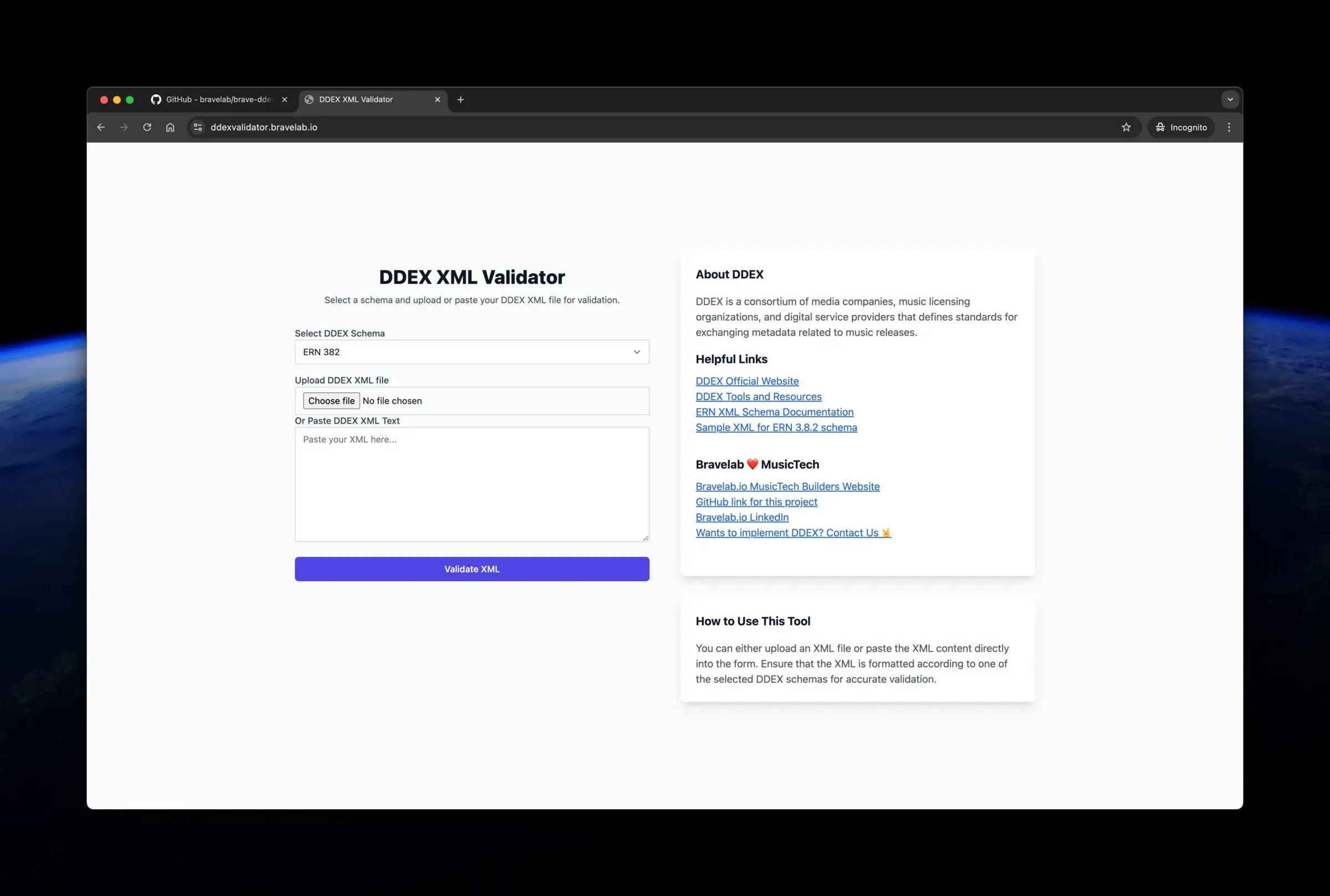
In addition to the tools offered by DDEX, the MTL DDEX Validator is a new open-source project developed to validate DDEX messages. Hosted by MusicTech Lab, this tool is designed to help users ensure compliance with DDEX standards, specifically for validating Electronic Release Notification (ERN) messages.
The project can be accessed both as a web-based tool and through its GitHub repository:
- Web Tool: The MTL DDEX Validator allows users to upload DDEX XML files and check their conformance with the official standards. This provides a quick and user-friendly way for developers and rights holders to verify their metadata.
- GitHub: MTL DDEX Validator on GitHub offers the full codebase, allowing developers to contribute, clone, or modify the validator to suit their needs. This Python-based project focuses on ensuring accurate and up-to-date validations of XML files used for music metadata exchange, making it an invaluable tool for digital service providers and record labels.
- Language: Python
Additional Resource: MusicTech Open-Source Catalog
The MusicTech Open-Source Catalog by MusicTech Lab is a dedicated resource for music technology tools, including DDEX-specific projects. It offers a variety of open-source tools designed to help developers in the music industry.
In need of DDEX standard implementation?
If you need expert support for integrating DDEX standards into your digital music platform, MusicTech Lab offers professional services to streamline implementation. Learn more and get started with DDEX integration by visiting the MusicTech Lab DDEX Integration Services for personalized solutions tailored to your business needs.
Let's Build Something Together
Have a similar project in mind? We'd love to hear about it.
Get in touch to discuss how we can help bring your vision to life.
Office Hours with MusicTech Lab's DDEX Expert
Free DDEX office hours for MusicTech teams. Get help with DDEX compliance, ERN implementation, data models, and integrations with DSPs.
Extracting Data from Ableton .als and .asd Files
A deep dive into parsing Ableton Live project files. Learn what metadata hides inside .als and .asd files and how to extract it with Python.
Related Articles


Technical Partner
Technical partner at MusicTech Lab with 15+ years in software development. Builder, problem solver, blues guitarist, long-distance swimmer, and cyclist.
Newsletter
Get music tech insights, case studies, and industry news delivered to your inbox.