
Low-Code Magic Won't Solve MusicTech Reality

MusicTech Insights #7 | Curated by Mariusz Smenżyk
This issue is curated by Mariusz Smenżyk, co-founder and Technical Partner at MusicTech Lab. Expect slightly more technical than usual. If you like your MusicTech with a bit of code and a dash of reality check, this one’s for you.
Low-Code Magic Won't Solve MusicTech Reality
Hi, I’m Mariusz. I work directly with teams building technology for the music industry, from early prototypes to production systems that must scale, stay reliable, and survive real-world complexity.
Building in MusicTech has never been faster or more experimental. AI agents help write code, prototypes ship before specs are finished, and “vibe coding” often replaces long architectural debates. Momentum matters. Speed matters. Shipping matters. But speed without structure is dangerous. Rights, royalties, metadata, and trust don’t pause for experimentation. Faster builds can easily become fragile systems.
Looking toward 2026, I see clear signals that separate teams who will ship reliable products from those chasing hype.
- Agentic infrastructure becomes standard: AI agents will act more like team members, with roles, limits, budgets, and rules. Managing them safely is essential.
- MCP management becomes a discipline: More tools expose APIs. The challenge is no longer just connecting systems, but reliably orchestrating and controlling them.
- Focus on near-deterministic AI systems: When money, rights, or compliance are involved, reproducible, predictable results matter more than creative variation.
- Platform engineering adapts to AI workflows: Internal platforms will treat agents as core components, with clear ownership and lifecycle management.
- Shift from prototype-first to production-ready tooling: Quick demos are useful, but real value comes from hardening, testing, and running AI in production.
Below is my handpicked selection of insights worth paying attention to. They may be slightly more technical than usual, but they reflect what actually matters if you’re building, scaling, or investing in MusicTech products this year.
Spotify Data Dump: Big Drama, Small Impact
A pirate group scraped Spotify and released massive metadata dumps. Spotify confirmed the unauthorised scraping and quickly pulled the plug, saving the world from a very expensive “side project.”
Even from a research or defensive perspective, the scale is overwhelming. You are immediately in full data-lake territory with massive storage, chunked ingestion, deduplication, and metadata indexing. The real challenge is processing the files: extracting audio features, cleaning messy metadata, and running quality checks. Anything beyond a tiny sample needs serious distributed systems.
Analysing 300+ terabytes of data is not a side project. A full pass of feature extraction across 86 million tracks could cost hundreds of thousands of dollars in cloud infrastructure before accounting for engineering, QA, or reruns. At that point, you are basically running a full-scale music analytics platform without any rights to do so.
The bottom line is simple. This leak may sound impressive, but it is mostly noise. For the industry, it changes almost nothing.
The Backstage Playbook: What MusicTech Founders Can Actually Steal from Spotify
Spotify Backstage is now five years old, and it’s easy to underestimate its value. What started as an internal developer portal became an open-source framework: a single place for services, APIs, documentation, and operational tools.
For founders, the lesson is simple: complexity kills speed. Backstage shows how Spotify’s teams turned messy systems, tribal knowledge, and scattered tools into something scalable and understandable. It’s not a silver bullet, but it proves that investing in internal clarity pays off.
If your MusicTech company manages catalogs, AI pipelines, or complex integrations, ignoring Backstage-style organization is like ignoring accounting until your books explode. Less hidden knowledge, clear ownership between platform and product teams, and a single source of truth make running complex systems less painful and faster to scale.
MCP agents in MusicTech (Epidemic Sound example)
More tools are exposing their APIs and endpoints. Model Context Protocol (MCP) acts like a standard port that lets AI apps securely call real tools and data sources instead of guessing. Epidemic Sound’s new MCP server is a good example. It focuses on music discovery within creative workflows.
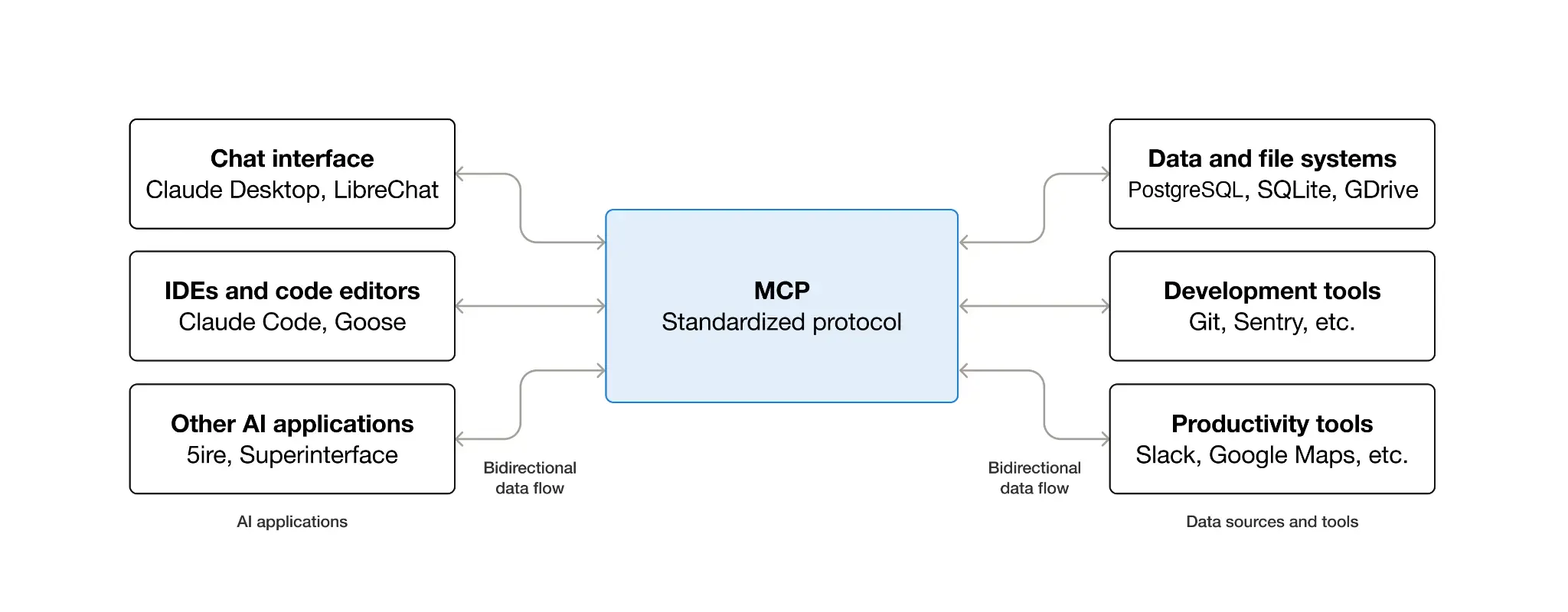
For creative teams, this removes friction. Instead of switching between search tools, playlists, and messages, they can simply ask: “Find tracks like X, but a bit less intense and slightly faster.” This becomes a repeatable system action rather than a one-off search. Agents can prepare shortlists, explain why tracks fit, and pass the final choice to a human. Taste stays human, but the process is faster and simpler. MCP turns AI from a chat tool into a working tool. Decisions are quicker, workflows are repeatable, and results are easier to trust.
I asked myself how easy it would be to build an MCP server like Epidemic Sound.
LTDR: A prototype is easy, production is harder.
A prototype can take a few hours to a few days. If you already have an API for search, metadata, and preview URLs, you can wrap it as MCP tools quickly using something like FastMCP. The MCP layer is mostly about defining tools and handling requests and responses.
A production version can take weeks. Epidemic’s server is a safe and well-controlled bridge to their catalog. This means handling the “boring but important” parts properly: authentication, limits, caching, monitoring, and usage rules. Most of the work and time go there.
No-Code vs Reality: Why MusicTech Still Ends Up Custom
AI app builders like Lovable are getting better. You can go from idea to something that looks production-ready in days, not weeks. That speed is real and useful. The problem is that good-looking demos create false confidence about how close you are to a real product.
As soon as real users show up, the illusion breaks. Authentication, roles, multi-tenant data separation, audit logs, and background jobs are not advanced features. They are table stakes in MusicTech, especially in rights, licensing, analytics, and B2B tools. These issues rarely appear on screen, but they decide whether a system survives contact with reality.
This is why the music industry keeps rebuilding custom software. Not out of habit, but out of necessity. MusicTech is not one business model. It is a collection of overlapping businesses with incompatible rules, contracts, and exceptions. Generic tools fail exactly where the real value lives: in workflows, edge cases, and controlled data flow.
AI tools are great for learning fast and testing ideas. But in 2026, if your product touches money, rights, or trust, prompts are not a strategy. Ownership, architecture, and deliberate design still win.
Let's Build Something Together
Have a similar project in mind? We'd love to hear about it.
Get in touch to discuss how we can help bring your vision to life.
The End of an Era: It's All About to Crash
Handpicked articles, updates, and insights from the fast-moving world of music and entertainment technology, curated just for you.
The New Economics of Game Music
Handpicked articles, updates, and insights from the fast-moving world of music and entertainment technology, curated just for you.
Related Articles

Technical Partner
Technical partner at MusicTech Lab with 15+ years in software development. Builder, problem solver, blues guitarist, long-distance swimmer, and cyclist.
Newsletter
Get music tech insights, case studies, and industry news delivered to your inbox.