
How to conduct workshops for creative industry?
Key Takeaways
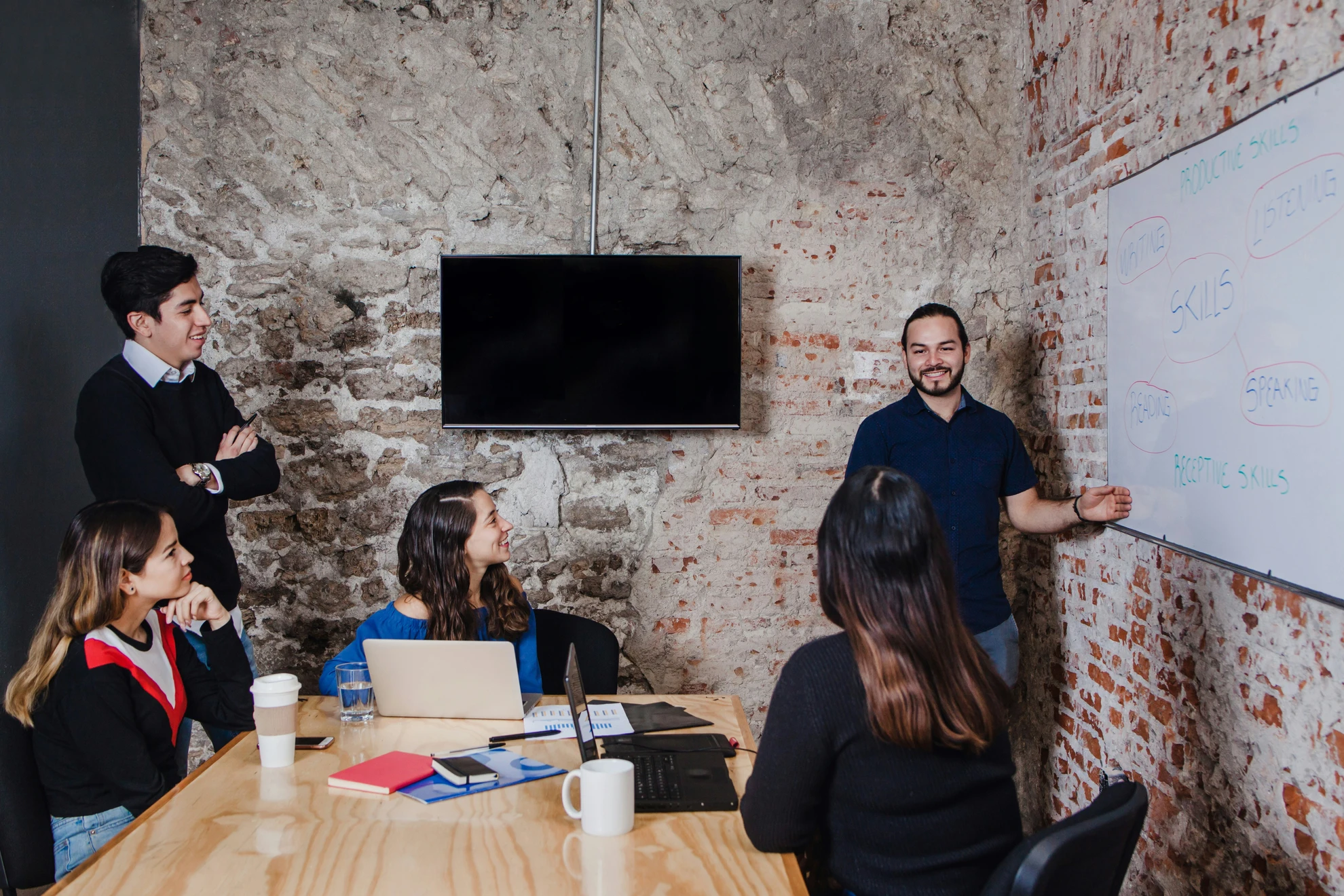
Imagine a room filled with people, gathered around a table covered with laptops and sketches. The atmosphere is charged with anticipation and creativity as they begin a workshop to develop the next big thing in music technology. This isn’t a typical corporate meeting – it's a workshop tailored for the innovative minds from creative industries.
In this setting, traditional requirement gathering methods are set aside. Instead, participants dive into brainstorming sessions, sketching ideas, and quickly prototyping new concepts. The goal is to capture the raw creativity and technical insights of these professionals. The facilitator guides the flow of ideas, adapting the workshop to fit the dynamic nature of creative processes.
This article explores how to conduct software requirement gathering workshops for the creative industries. We’ll discuss why traditional methods of formal analytical workshops often fail with creative professionals and how flexibility, visual engagement, and collaboration can lead to better outcomes. Whether you're a project manager, business analyst, or facilitator, these insights will help you unlock the potential of your creative teams and make your workshops something much more fruitful.
Understanding Creative Professionals
Creative professionals often blend artistic vision with technical skill. Their approach to projects is driven by innovation, user experience, and a desire to push boundaries. Understanding their mindset and work style is crucial for conducting effective software requirement gathering workshops.
Unique Traits and Work Styles
Creative professionals thrive in environments that allow for flexibility and exploration:
Scientific Insights on Creativity
Challenges with Traditional Methods
Traditional requirement gathering methods often fail with creative professionals:
Tailoring the Workshop Approach
To effectively engage creative professionals, it's essential to tailor the workshop approach to their unique needs and working styles. This involves incorporating flexibility, using creative tools, and designing dynamic activities that stimulate innovation and collaboration.
Flexible and Dynamic Activities
Creative professionals thrive in environments that allow their ideas to flow freely and evolve organically. Traditional, rigid structures can inhibit their creative processes, so workshops should incorporate flexible and dynamic activities.
- Brainstorming Sessions: Encourage open-ended brainstorming sessions where all ideas are welcomed without immediate critique. This approach helps generate a broad range of possibilities and fosters an inclusive environment. For example, start with a "brain dump" session where participants quickly jot down any idea that comes to mind on sticky notes. Then, group similar ideas together and discuss each cluster to explore potential directions.
- Design Sprints: Implement short, time-boxed design sprints that focus on developing and testing ideas quickly. For instance, dedicate one day to ideation, the next to prototyping, and the third to testing with real users. This rapid cycle allows participants to see their ideas in action and make quick adjustments based on feedback.
- Ideation Workshops: Organize workshops dedicated to ideation, where participants can explore and develop new concepts collaboratively. Structure the session with phases: start with individual idea generation, move to small group discussions to refine ideas, and then reconvene as a larger group to share and further develop the best concepts.
Creative Tools and Techniques
Engaging the Senses
Creative professionals respond well to multi-sensory engagement:
Encouraging Participation and Collaboration
Creating a collaborative environment is essential for harnessing the potential of creative professionals. Facilitators should employ techniques that encourage active participation and idea sharing.
- Role-Playing and Scenario Planning: Use role-playing and scenario planning to help participants explore different perspectives and test ideas in various contexts. For example, participants could role-play as different user personas interacting with a new music app, identifying potential pain points and areas for improvement. This technique fosters empathy and a deeper understanding of user needs.
- Gamification: Incorporate gamification elements to make workshops more engaging and fun. For instance, set up a "design challenge" where teams compete to come up with the most innovative solution to a given problem within a limited time frame. Offer small rewards for the most creative ideas or the best teamwork to motivate participants.
- Open Dialogue: Foster an atmosphere of open dialogue where all participants feel comfortable sharing their thoughts and ideas. Encourage active listening and constructive feedback by using techniques like "round-robin" discussions, where each participant takes a turn to speak without interruption. This ensures everyone has a voice and contributes to the collective brainstorming process.
Facilitation Techniques for Success
Facilitating workshops for creative professionals requires an adaptive and engaging approach to foster innovation and participation. Here are some effective techniques tailored for this audience:
Adaptive Facilitation
Effective facilitation starts with flexibility. Rather than rigidly sticking to a pre-set agenda, be prepared to adjust based on the flow of ideas. For example, if a brainstorming session sparks particularly innovative discussions, allow more time for them to unfold. This approach encourages participants to delve deeper into their creative processes without feeling constrained by time limits.
Creating an environment that encourages spontaneity is equally important. It may not be easy due to space constraints, but at least try to compensate for things with activities like real-time sketching sessions where participants can immediately visualize their ideas. This not only captures the creative spark but also helps in refining concepts collaboratively.
Managing Time Creatively
Dynamic time management involves setting flexible time blocks that can be adjusted based on the group’s engagement. Allocate more time for discussions that yield rich ideas and shorten periods where creativity seems to stall. This ensures that the workshop remains productive and responsive to the participants' needs.
Incorporating regular breaks is essential. These breaks give participants time to reflect and process information. For example, short, frequent breaks where individuals can step outside, with a coffee, a cigarette or just stretching the legs and engaging in informal conversations can lead to deeper insights and more innovative solutions once the group reconvenes.
Encouraging Participation and Collaboration
Inclusive activities are crucial for gathering a wide range of ideas amongst participants. Here are some methods fostering participation and collaboration that can be used at the beginning, during and at the end of the workshop – so no one will be left behind.
- Picture Tales: The Picture Sorts technique is an engaging method used to uncover deeper insights and stimulate creative thinking in workshops. To arrange this activity, facilitators provide participants scissors and a variety of color magazines and other visual materials. Participants are then asked to cut out images that they feel represent specific themes or concepts related to the workshop’s objectives, such as customer experiences, desired outcomes, or emotional responses to a new product. For example, in a musictech workshop, participants might select images that they associate with user satisfaction or innovative features of a new music app. This visual and hands-on approach helps participants articulate abstract ideas and emotions that might be difficult to express through words alone.
Conducting the Picture Sorts activity involves several steps. First, facilitators introduce the task and explain the themes or questions participants should consider while selecting images. Participants are given time to browse through the visual materials and create their collages. Once completed, they present their selections to the group, explaining why they chose each image and what it represents. This often leads to rich discussions and a deeper understanding of the underlying motivations and desires of users or stakeholders. The visual nature of this technique helps break down complex concepts and promotes a more intuitive and creative exploration of the workshop topic,
- As an alternative to unstructured group discussion/brainstorming, a quite engaging Parallel Lines method can be used. It involves arranging participants into two lines facing each other, ensuring everyone has a partner. Each participant is assigned a specific role or perspective related to the workshop topic, such as different user personas or stakeholders in a project. For instance, one line might represent musicians while the other represents users. The pairs then engage in focused, one-on-one discussions on predefined scenarios or questions, like "How would this new feature improve enjoyment of music?" or "What challenges do you anticipate with this technology?"
After a set time, typically 5-10 minutes, one line shifts to the next partner, creating new pairs for each round and allowing diverse perspectives to emerge. This one-on-one interaction can reveal insights that might be overlooked in a larger group setting.
- For a summary of the results, you can use techniques like the Gallery Walk. To arrange this activity, participants are divided into small groups, each tasked with discussing a particular aspect of the workshop topic and creating a visual summary of their discussion on a flipchart or poster. These visual summaries, often including diagrams, charts, and key points, are then displayed around the room like an art gallery. For instance, in a musictech workshop, groups might explore different user interface designs or feature sets for a new music app, visually presenting their ideas for others to review.
Conducting a Gallery Walk involves several steps to ensure effectiveness. First, facilitators explain the objectives and divide participants into groups, providing them with the necessary materials and a clear timeline. After creating their visual summaries, groups post their flipcharts around the room. Participants then circulate, reviewing each group's work at their own pace. This setup allows for deeper engagement as individuals can discuss and ask questions with the group members who created the displays. One person from each group might stay with their flipchart to answer questions and provide further insights.
These methods encourage everyone to contribute and learn from different perspectives, helping even shy people present their ideas and do not allow the most extroverted participants to dominate the workshop.
Instead of a Summary
Imagine the end of the workshop — the room filled with sketches, mind maps, and prototypes made of paper clips and duct tape. This wasn’t a typical meeting. It was a workshop tailored for creative minds, transforming abstract visions into something tangible.
Need Help with This?
Building something similar or facing technical challenges? We've been there.
Let's talk — no sales pitch, just honest engineering advice.
How to Build an MVP in 6 Steps
Starting a new product can be an exciting and daunting prospect. On one hand, it's a chance to bring a new idea to life and potentially change the world.
How to easily create form in Angular
Develop an angular form with validation for angular js web development services. Create an angular form with multiple components easily.
Related Articles
Newsletter
Get music tech insights, case studies, and industry news delivered to your inbox.